
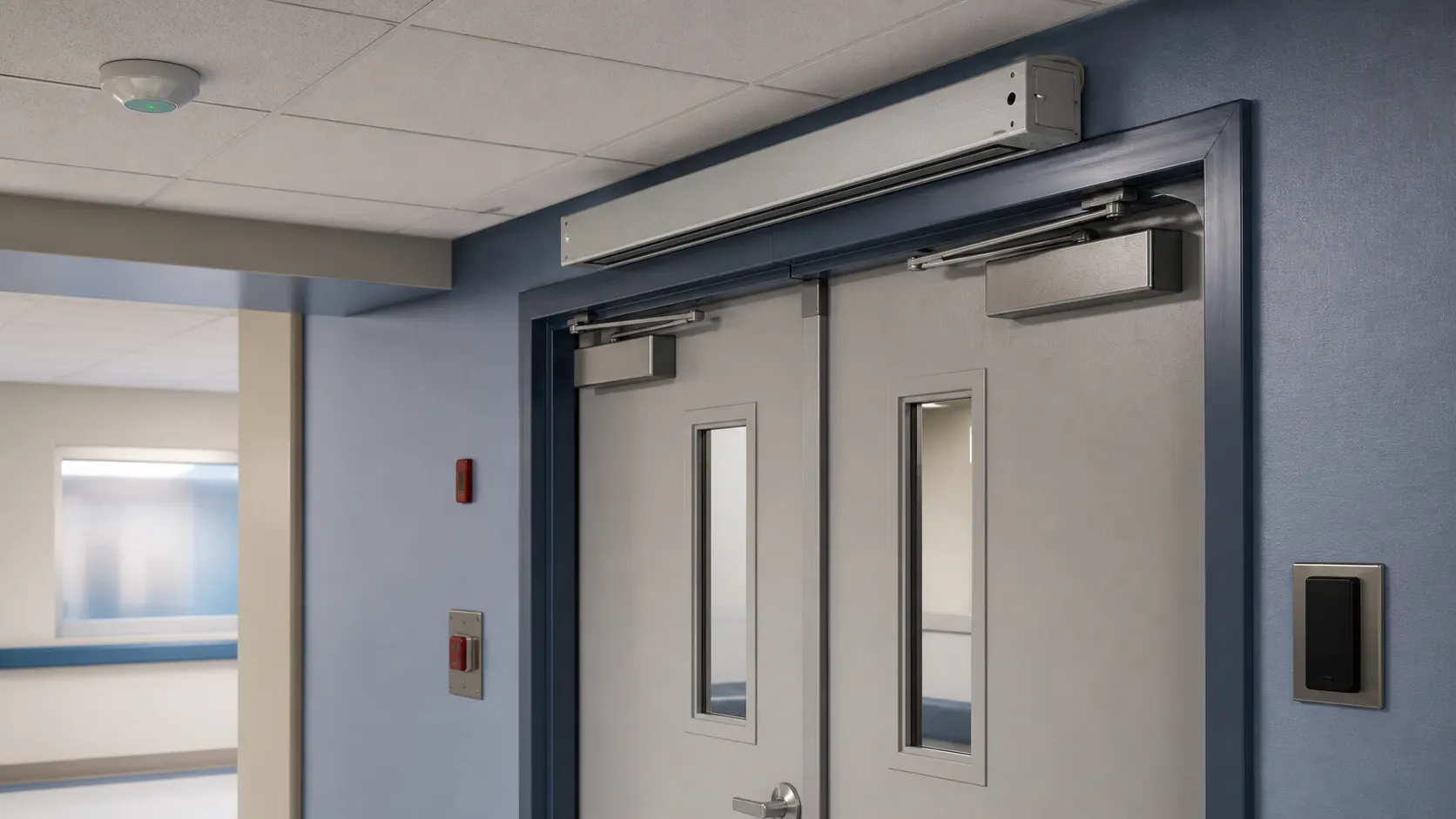
Identify the locking arrangement before testing it
Delayed-egress, sensor-release or access-controlled egress, elevator-lobby locking, and clinical-needs locking are different arrangements with different conditions. A door may also combine access control on the entry side with a regulated release function on the egress side. Inventory each opening by the actual system design, occupancy, purpose, hardware, and approved sequence. Calling every magnetic lock “delayed egress” can lead inspectors and technicians to test the wrong criteria.134
Confirm the occupancy and system prerequisites
CMS-2786R K222 states that approved, listed delayed-egress systems serve low- or ordinary-hazard contents and depend on the specified supervised fire detection or sprinkler protection. Other locking paths can require different combinations of detection, sprinklers, monitoring, staff control, or clinical justification. Verify that the building and affected area meet the prerequisites before evaluating release timing or signage; a correct lock cannot cure an ineligible occupancy or missing protection system.132
Test the complete delayed-egress sequence
A delayed-egress review should verify the listed assembly, initiating action, delay sequence, local alarm, required signage, force and duration conditions, emergency release, power-loss behavior, relocking method, and interfaces required by the adopted provision. The test record should describe what initiated the sequence and what occurred, not merely state that the door passed. Staff should understand that normal credential access and the emergency egress function are related but not identical.135
Evaluate sensor-release doors as an integrated system
For a sensor-release arrangement, confirm the sensor detects an approaching occupant across the required area and releases the lock without special knowledge or effort. Test the independent manual release device, fire-alarm and sprinkler interfaces where applicable, loss of power, door hardware, and the path after release. Furniture, decorations, construction barriers, or a relocated reader can affect operation even when the lock itself has not changed.134
Keep clinical-needs locking in its own decision path
Healthcare occupancies may use specialized locking where patient clinical needs require protective measures, but that permission carries occupancy, staff, release, fire-protection, and emergency-response conditions. Do not justify a delayed-egress or ordinary access-control installation after the fact by calling it clinical. The facility should preserve the approved clinical and technical basis, responsible program leadership, staff access provisions, emergency procedures, and reevaluation trigger when patient populations or operations change.1356
Coordinate fire alarm, sprinkler, security, and power interfaces
Locking performance depends on several departments and systems. Document the input-output sequence, power source, fail-safe behavior where required, initiating devices, supervisory conditions, security programming, and notification path. Test after software changes, hardware replacement, construction, or fire-alarm work that can alter an interface. A security vendor’s functional test may not cover the Life Safety Code sequence, while a fire-alarm report may not confirm door hardware and staff response.1345
Build survey-ready opening records
Maintain a unique door identifier, location, locking type, code basis, listing information, approved drawings, sequence of operations, protection-system prerequisites, test method, result, deficiency status, corrective action, and staff-training evidence. Reconcile that inventory with current floor plans and the CMS K222 review path. Sample doors during readiness rounds and require observed behavior to match the approved sequence. Unresolved differences should be treated as system questions, not closed by relabeling the hardware.
After any repair, repeat the complete functional sequence with the connected systems restored to normal and retain the observed result. Trend repeated failures by hardware model, software configuration, power source, and location so the facility can address systemic reliability instead of repeatedly adjusting one opening without understanding the shared cause.3456
Explore the complete topic
Continue from this article into the connected cornerstone guides, detailed conditions, exact questions, and related services.