
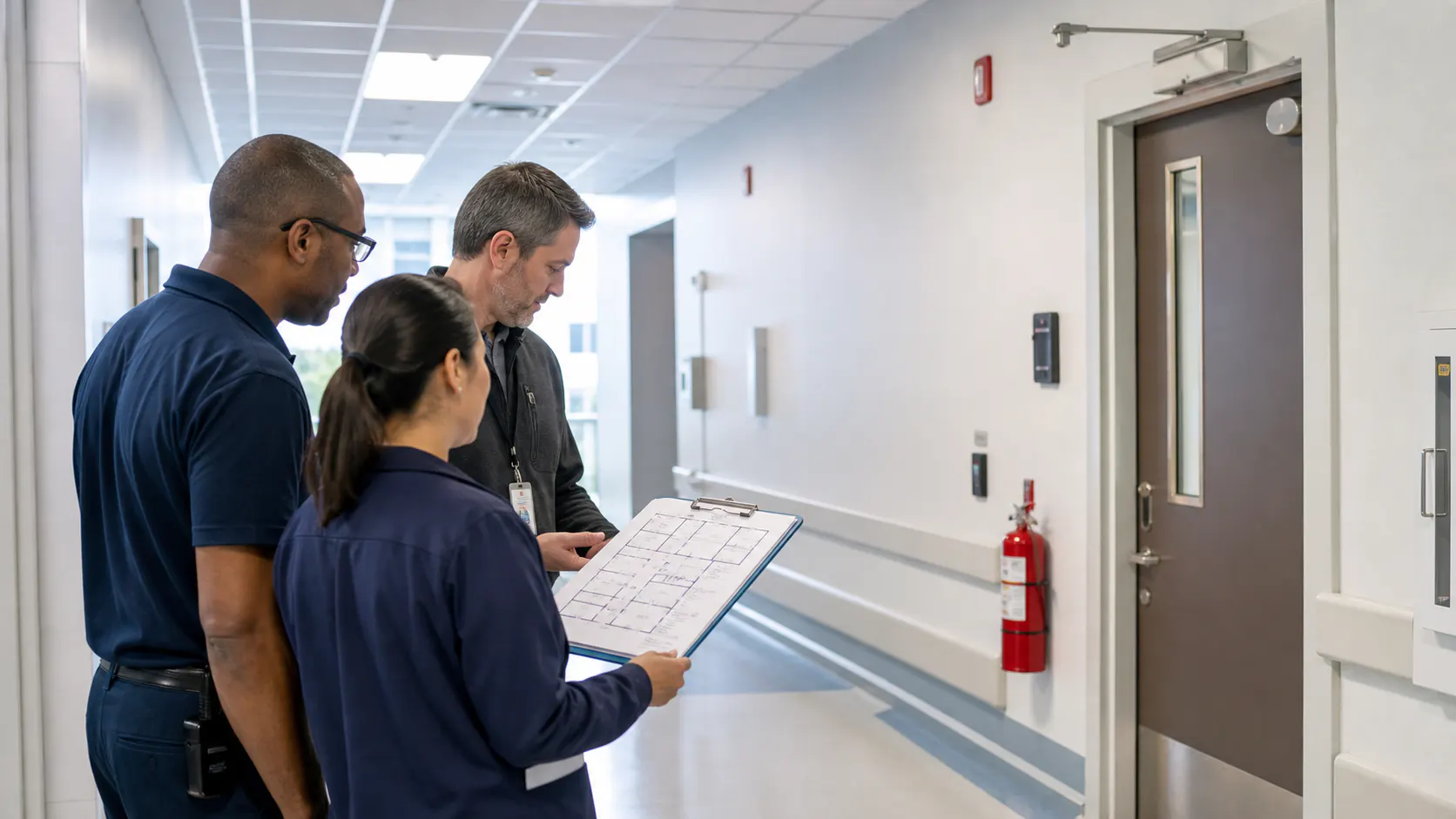
Define scope and independence before walking
An effective mock survey begins with the provider type, buildings, occupancies, adopted editions, accreditation program, and survey purpose. Select reviewers who can challenge familiar assumptions and who are qualified for the systems they evaluate. Internal staff can participate, but the process loses value when reviewers inspect only their own work or avoid known problem areas. State the sample limits and do not label unobserved or inaccessible conditions compliant. The goal is a credible rehearsal and discovery exercise, not a reassuring score.45610
Follow the CMS Appendix I sequence
Structure the exercise around Appendix I: offsite preparation, entrance activity, orientation, information gathering, analysis, exit conference, and post-survey work. Review prior findings, floor plans, waivers, system inventories, inspection records, construction activity, and open corrective work before the field visit. Then conduct an orientation tour that tests whether the documents describe the actual facility. Using the official sequence reveals handoff, retrieval, and communication weaknesses that a room-by-room checklist alone will miss.128
Build samples from risk and facility change
Select samples across buildings, occupancies, shifts, and system types. Include recent renovations, departments with changed use, recurring work orders, overdue actions, high-risk patient areas, concealed barrier work, and locations implicated by prior findings. Add random samples so the exercise does not merely revisit known issues. Trace a representative item from life safety drawing to field condition, inspection record, deficiency, work order, and closure evidence. A mock survey should test systems of control as well as individual walls, doors, devices, and logs.21079
Observe realistic operations
Walk the environment while the facility is operating. Test egress routes, door functions, corridor use, hazardous-area conditions, construction controls, fire protection features, utilities, and emergency power evidence without creating unsafe conditions or interfering with care. Speak with responsible staff about routine procedures and current impairments. Record the exact location, time, operating state, evidence observed, and any limitation. Photographs can assist where permitted, but a photograph without a stable identifier or written condition is weak corrective-action evidence.5617
Write findings in survey-ready form
Each mock finding should state the observed condition, stable location or asset, applicable source path, evidence reviewed, immediate risk control, and unanswered question. Distinguish confirmed facts from professional judgment. Map the condition to the applicable CMS-2786R topic only after establishing the technical basis; a K-tag label is not the complete requirement. For repeated or distributed conditions, describe the known scope and what population still must be evaluated. This precision lets leaders assign work and later verify that the same condition was addressed.215
Conduct an honest exit conference
Present findings by risk, scope, and system weakness, not by department politics. Explain what was observed, what evidence supports it, what remains uncertain, and which conditions require immediate protection or authority review. Allow facility representatives to supply missing factual evidence, but do not erase a finding because a plausible explanation was offered without documentation. Record factual corrections and unresolved disagreements. The exit conference should create shared understanding and ownership while preserving the independence of the mock-survey conclusions.139
Close the loop with verification and resampling
Convert findings into a corrective-action register with owner, due date, immediate measure, root-cause or contributing-factor review, extent-of-condition plan, action, monitoring, and required evidence of completion. Verify repairs at the original location and sample related locations before closure. Re-run document-retrieval and escort drills for weak processes. Trend repeat findings and overdue work. A mock survey succeeds when it changes everyday control and produces demonstrable closure; the number of observations found or the appearance of the final report is secondary.31089
Explore the complete topic
Continue from this article into the connected cornerstone guides, detailed conditions, exact questions, and related services.