
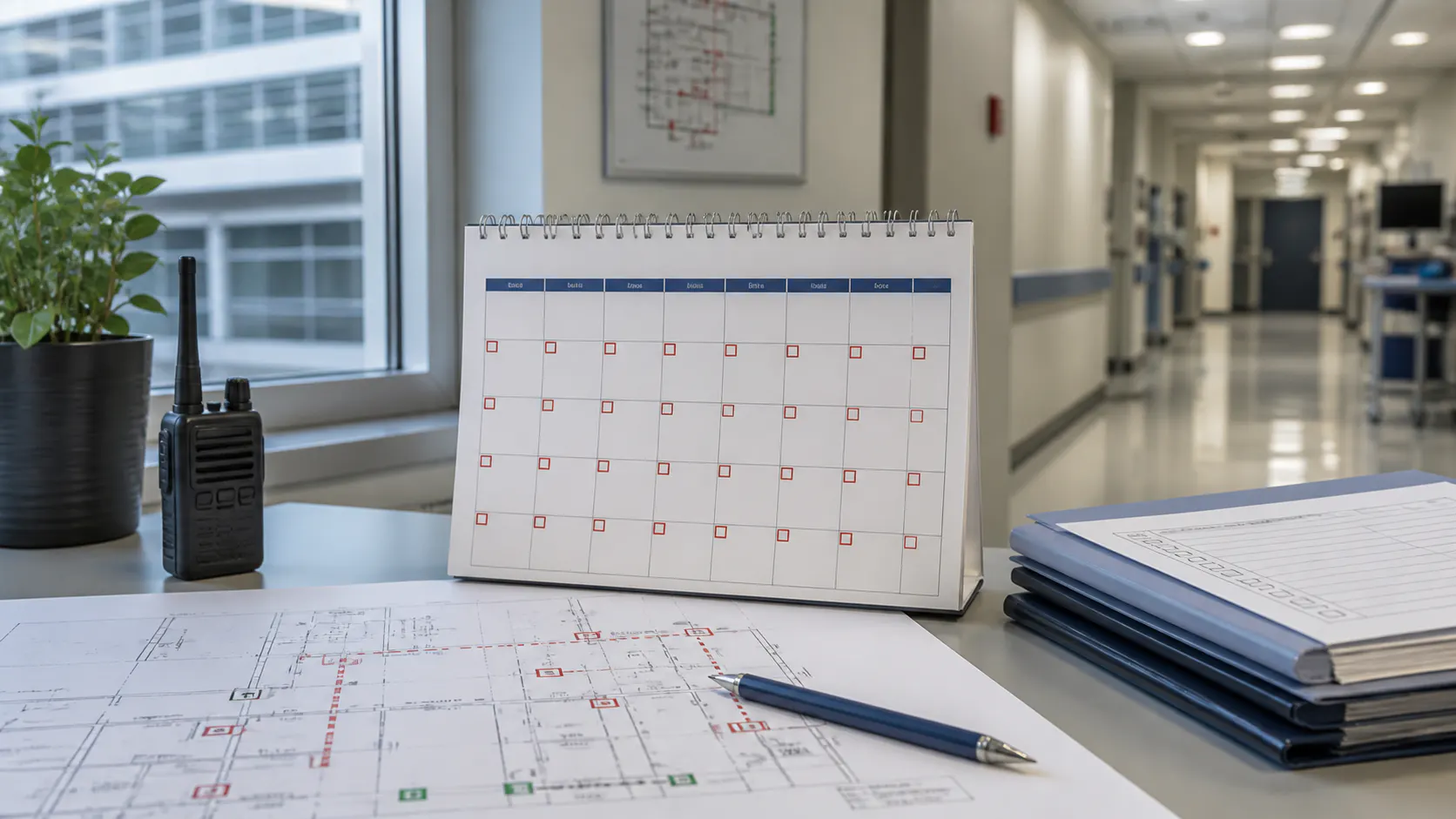
Use the countdown as a verification sprint
An unannounced survey cannot be scheduled by a countdown, so treat this as a thirty-day verification sprint that can start at any time. Do not manufacture records, conceal deficiencies, or defer routine safety work until the final week. Assign one accountable lead, define buildings and provider types in scope, confirm the adopted code and accreditation program, and open a central issue register. Escalate imminent hazards and impairments immediately regardless of the checklist day. The objective is accurate readiness and safer operations, not a temporary survey appearance.419
Days 30–24: establish the compliance picture
Reconcile current life safety drawings, occupancy and construction information, sprinkler status, waivers, open Plans of Correction, prior survey findings, system inventories, inspection schedules, active projects, and known impairments. Compare the document index with CMS-2786R and the current accreditor tool. Identify missing periods, obsolete plans, excluded assets, overdue work, and evidence held only by contractors. Rank issues by life-safety risk, survey exposure, duration, and corrective dependency. Give each gap an owner, immediate action, due date, and proof needed for closure.2378
Days 23–17: verify systems and field conditions
Sample egress, doors and locking, hazardous areas, fire and smoke barriers, sprinkler and alarm components, utilities, emergency power, storage, construction controls, and recent repairs across buildings and shifts. Trace each sample from asset inventory or drawing to inspection record, open deficiency, work order, and field condition. Correct simple hazards promptly, but assess extent of condition before closing systemic issues. For significant deficiencies or impairments, complete the required risk and Interim Life Safety Measures process and document implemented controls while permanent correction proceeds.5629
Days 16–11: close evidence gaps
Review contractor reports line by line for failed, inaccessible, excluded, or not-tested items. Match corrections to stable locations and independently verify completion. Reconcile identifiers across drawings, inspection reports, work orders, photographs, and invoices. Fill no gap with an invented or backdated record; document what is unavailable, why, the immediate risk response, and the plan to reperform or otherwise resolve the activity through the governing process. Update the open register daily and have a second reviewer challenge items marked complete.1378
Days 10–7: run the mock survey
Use an independent reviewer where practical and follow Appendix I from entrance activity through exit conference. Include an orientation tour, document requests, representative K-tag samples, recent project areas, prior findings, and after-hours or operational conditions that daytime rounds may miss. Test the escort team, on-call specialists, document coordinator, request log, and backup coverage. Write observations with location, condition, source path, risk, and evidence. Do not negotiate away mock findings; assign corrective action and resample related locations.127
Days 6–3: rehearse retrieval and communication
Finalize the controlled binder or electronic index and remove superseded convenience copies. Ask responsible staff to retrieve drawings, inspection and testing records, impairments, waivers, construction files, open findings, and closure evidence without advance notice. Practice concise, factual surveyor interaction: answer what is known, route uncertain questions, and never guess. Confirm room access, keys or badges, personal protective equipment, privacy controls, parking, workspace, and leadership contacts without creating a staged route that avoids normal operations.178
Days 2–0: sustain safe operations
Review high-risk open items, interim controls, overnight conditions, new work orders, active construction, system impairments, and upcoming tests. Verify that daily rounds and corrective work continue normally. Brief the core escort and backups on current facts, not scripted answers. Prepare a same-day response process for new findings and requested evidence. At day zero, transition the register, rounds, retrieval drills, and leadership review into a recurring continuous-compliance cadence. Readiness should remain visible after the thirty-day sprint because the next survey is unannounced and facility conditions keep changing.1398
Explore the complete topic
Continue from this article into the connected cornerstone guides, detailed conditions, exact questions, and related services.