
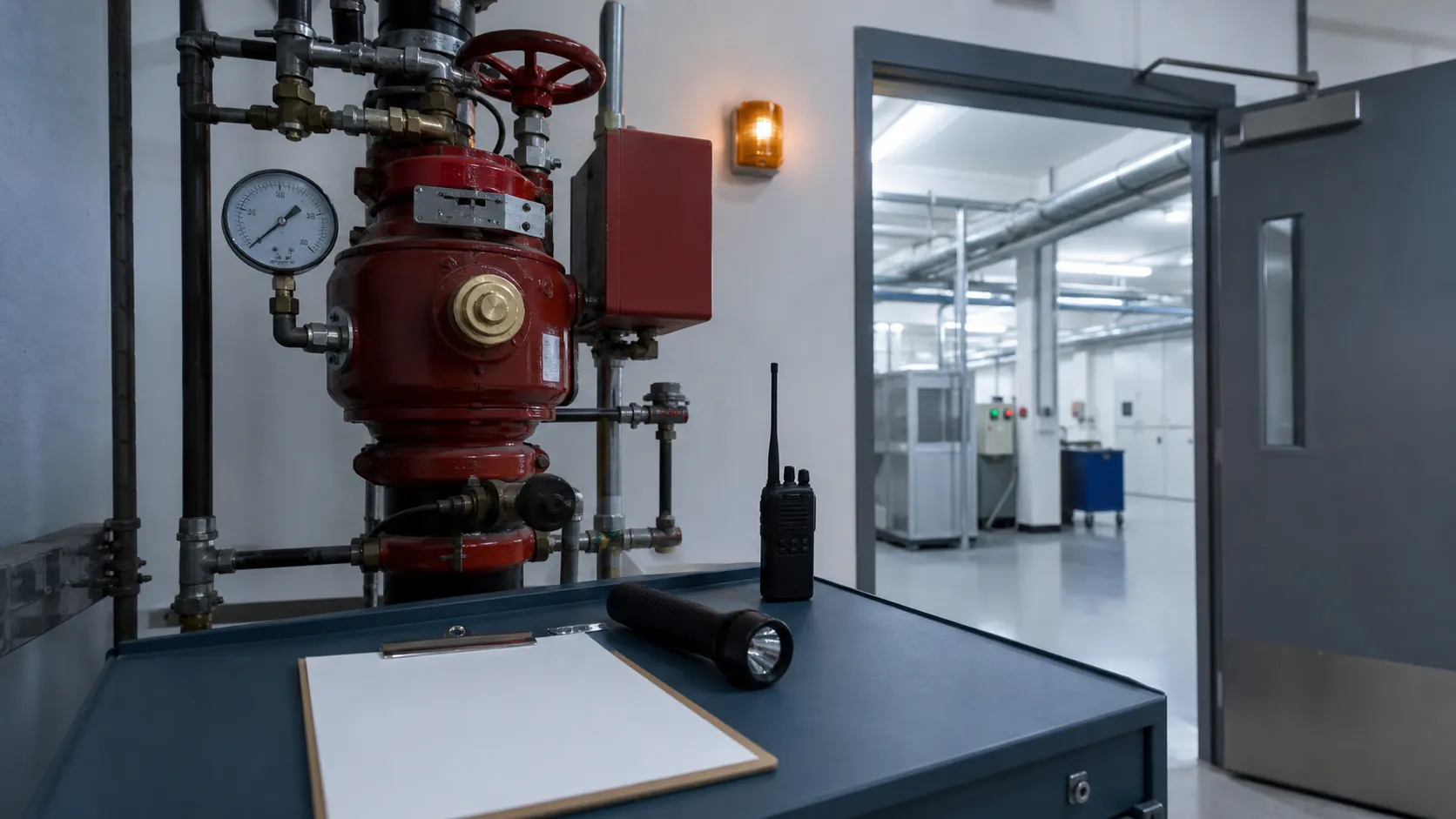
Identify the impaired function and affected area
An impairment exists when a required building feature or fire-protection system cannot perform its intended function. The first decision is not simply whether to start a fire watch; it is to identify what is unavailable, which occupants and compartments are affected, the expected duration, connected control functions, and immediate hazards. A planned valve closure, failed alarm panel, disabled smoke barrier, and blocked exit create different exposure and require different technical and operational responses.134
Use an immediate impairment decision path
The person discovering or authorizing the condition should notify the designated facility authority, stop unsafe work, define the affected boundaries, estimate duration, and initiate the organization’s impairment procedure. The responsible leader should determine required notifications, temporary protection, evacuation considerations, staff communication, and authority coordination. The record should begin when the impairment begins—not after restoration—so the timeline, decisions, and protected population can be reconstructed accurately.3457
Apply the fire-alarm out-of-service threshold correctly
CMS-2786R K346 states that when a required fire alarm system is out of service for more than four hours in a 24-hour period, the authority having jurisdiction is notified and the building is evacuated or an approved fire watch is provided for parties left unprotected until restoration. Facilities should not treat four hours as a permission to ignore a shorter shutdown; risk assessment, notification, and temporary measures can be necessary immediately based on the condition.132
Apply the sprinkler out-of-service threshold separately
CMS-2786R K354 requires the extent and duration of a sprinkler impairment to be determined, affected areas inspected, risk evaluated, recommendations provided to management, and appropriate authorities notified. When the system is out of service for more than ten hours in a 24-hour period, the affected building or portion is evacuated or an approved fire watch is provided until restoration. The ten-hour sprinkler threshold should not be confused with the four-hour fire-alarm threshold.132
Do not use fire watch and ILSM as synonyms
A fire watch is a specific temporary compensatory measure involving assigned personnel and an approved procedure. Joint Commission’s public ILSM guidance describes a broader policy and assessment process for construction-related situations and Life Safety Code noncompliance, with selected measures documented and maintained for the duration of the deficiency. A fire watch may be one action within a larger interim plan, but completing an ILSM form does not by itself satisfy a required fire watch.563
Control planned construction and emergency failures
Planned work should define isolation points, affected devices, duration, responsible contractors, notification sequence, temporary equipment, egress impacts, and restoration tests before shutdown. Emergency failures need the same information assembled rapidly, with conservative assumptions where the extent is unknown. Coordinate infection prevention and clinical operations without allowing those concerns to obscure life safety. If work expands beyond the approved boundary or time, reassess the impairment rather than extending the original authorization informally.4567
Document restoration and closeout
Closeout should identify the actual restoration time, tests performed, valves and controls returned to normal, alarm or supervisory signals verified, temporary measures discontinued, authorities notified, and staff informed. Retain patrol logs, impairment permits, test results, communications, and unresolved follow-up. Review recurring or extended outages for root causes and capital needs. A closed work order without system verification does not demonstrate that protection was restored or that the interim response remained effective throughout the event.3457
Explore the complete topic
Continue from this article into the connected cornerstone guides, detailed conditions, exact questions, and related services.