
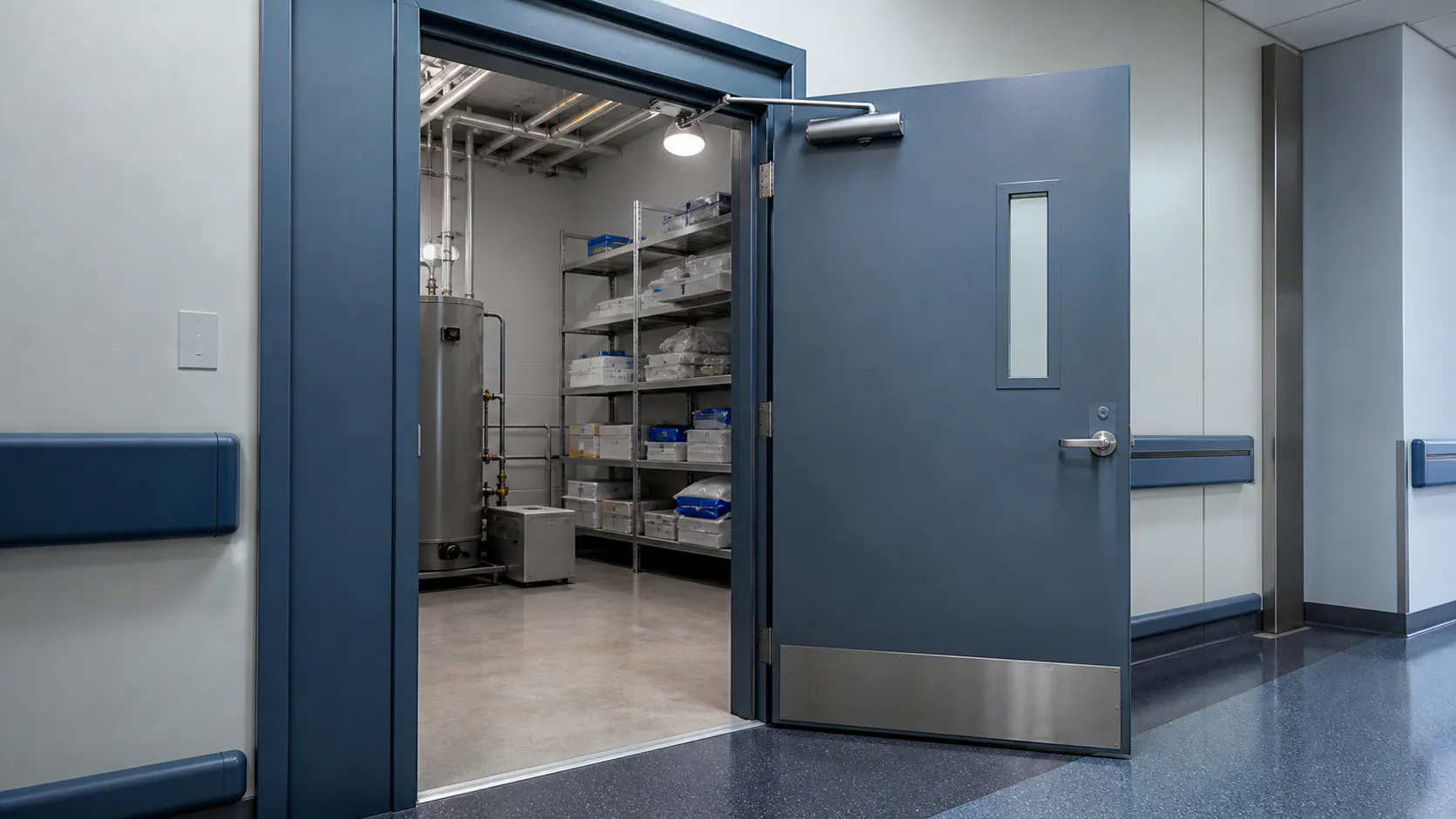
Classify the hazard from contents and use
A room is not a hazardous area merely because its name includes storage, utility, soiled, or mechanical. Classification depends on the actual contents, quantities, room size, equipment, fuel, and the applicable occupancy provisions. Conversely, a room labeled clean storage can become hazardous when combustible loading grows beyond the permitted condition. The survey-ready record should identify the observed use and the code pathway, not rely solely on signage or an outdated room schedule.145
Use the K321 room categories as a review path
CMS-2786R K321 lists examples including boiler and fuel-fired heater rooms, laundries over the stated area, repair and paint shops, specified soiled-linen and trash collection rooms, combustible storage rooms over 50 square feet, and laboratories classified as severe hazard. The list helps organize a review, but the facility must still confirm contents, thresholds, occupancy, new or existing status, and any more specific provision that applies.431
Choose the complete protection pathway
For existing health care occupancies, K321 describes protection using a one-hour fire barrier with three-quarter-hour fire-rated doors or an approved automatic fire-extinguishing system with the specified smoke-resisting separation. These are complete arrangements with conditions; installing a sprinkler head does not automatically resolve walls, openings, or door operation. The reviewer should identify which pathway the facility relies on and verify every component required for that pathway.142
Verify the door as part of the enclosure
Door rating, frame, glazing, hardware, clearances, closing, latching, and field modifications must be evaluated in the context of the required assembly. K321 states that doors in the sprinkler-based existing-occupancy pathway are self-closing or automatic-closing. A rated label alone does not prove the opening will protect the enclosure, and a nonrated door should not be rejected without first confirming whether the selected pathway actually requires a rating.214
Trace continuity beyond the visible walls
Review the barrier above ceilings, at structural interfaces, around ducts and penetrations, and at every opening. A compliant door cannot compensate for an unprotected penetration or discontinuous enclosure. Likewise, a repaired penetration does not resolve a door that fails to close. Life safety drawings, tested assemblies, firestopping records, and field observations should tell one consistent story about the room boundary and its protection method.146
Control changes in room use and loading
Materials accumulate gradually, departments relocate supplies, and utility rooms become convenient overflow space. Establish allowable uses, container or quantity limits where relevant, housekeeping expectations, and a review trigger before a room changes function. Include environmental services, supply chain, laboratory, pharmacy, maintenance, and construction teams. When observed contents no longer match the approved classification, evaluate immediate risk and the extent of similar conditions before choosing a permanent correction.567
Create a defensible hazardous-area inventory
For each room, record a stable identifier, floor, use, size, representative contents, classification basis, sprinkler status, enclosure pathway, wall rating, door requirements, inspection status, and unresolved evidence. Reconcile the inventory with drawings and door records. During survey preparation, sample rooms from each category and confirm that field conditions, maintenance records, and the K-tag analysis agree. Uncertain rooms should remain open for qualified review instead of being assigned a convenient pass result.
Assign ownership for periodic content verification as well as building maintenance. A technically correct enclosure can become noncompliant when supplies, equipment, or fuel change, while a room with reduced loading may still retain protections that should not be removed without formal review. Preserve the decision history so future projects do not reverse an approved safeguard based on an incomplete room label.4567
Explore the complete topic
Continue from this article into the connected cornerstone guides, detailed conditions, exact questions, and related services.