
Define scope and applicability
Start by defining the campus, buildings, provider type, occupancies, departments, systems, time period, and purpose of the assessment. EC.02.06.01 may organize the accreditation conversation, but the assessment must also recognize the hospital physical-environment Condition of Participation, adopted NFPA requirements, jurisdictional rules, and facility policy. State which records and areas are included and identify exclusions, inaccessible spaces, and unresolved authority questions. Do not represent a limited sample as a complete facility certification. The approved scope should reflect patient risk, building history, construction activity, prior findings, and known system vulnerabilities.123456789
Assemble the baseline record
Collect current life safety drawings, utility plans, asset inventories, preventive-maintenance schedules, inspection and test reports, open work orders, incident reports, construction permits, impairment logs, previous survey findings, risk assessments, and committee minutes. Check version dates and field identifiers before using the records to select samples. Look for missing assets, conflicting locations, overdue activities, and records that show performance without documenting exceptions. A reliable baseline lets the team distinguish a new field condition from a longstanding documentation failure and makes the final risk ranking traceable to evidence rather than memory.123456789
Observe representative plant conditions
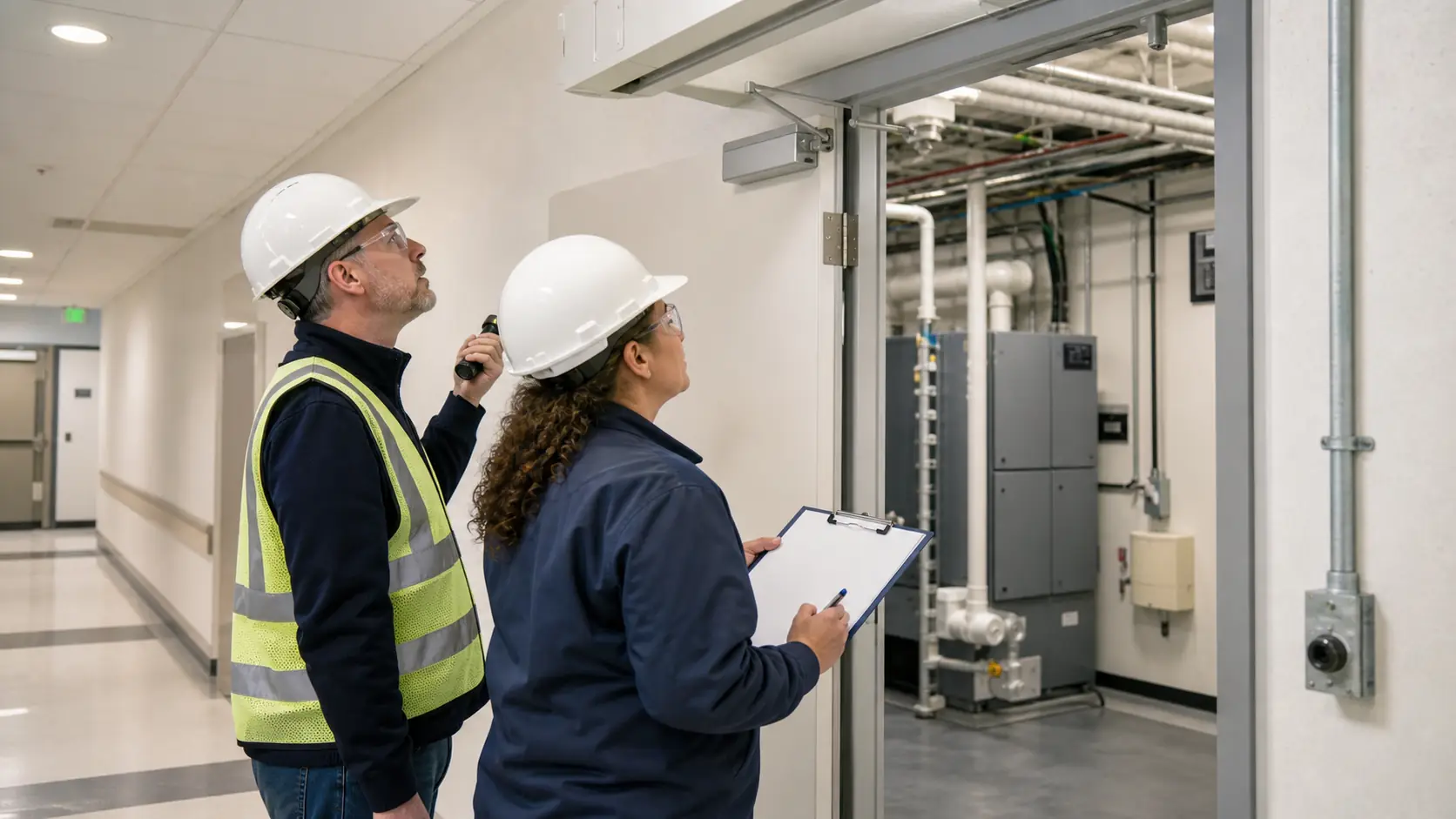
Walk representative patient-care, public, support, roof, exterior, mechanical, electrical, storage, and construction areas with personnel who understand the systems and operations. Observe egress, fire and smoke protection, utilities, equipment clearances, water intrusion, structural deterioration, environmental controls, hazardous storage, access, housekeeping, and temporary conditions. Sample across shifts or operating states when risk changes with deliveries, shutdowns, weather, staffing, or contractor work. Record facts, photographs when allowed, asset identifiers, and access limitations. Avoid testing systems outside an approved safety procedure or disrupting clinical service merely to complete an assessment.123456789
Apply a documented risk method
For every issue, describe the hazard, people and operations exposed, credible consequence, likelihood or frequency, duration, existing controls, detectability, regulatory relationship, and uncertainty. Use the facility's approved risk matrix consistently and explain any override of the calculated priority. Risk scoring helps sequence action; it cannot waive a mandatory requirement or replace an authority decision. Escalate imminent hazards and impaired protections immediately. Conditions that appear low severity individually may warrant higher priority when they are repeated, widespread, difficult to detect, or evidence of a failed management process.123456789
Turn assessment results into a managed plan
Create a corrective-action register that assigns each finding to an accountable owner, immediate protection, permanent action, budget or project path, due date, and verification method. Group systemic issues by root cause without losing the original locations. Identify items requiring design-professional, infection-prevention, clinical, security, or authority review. Report both risk and compliance status accurately: a funded capital project does not close the current exposure. Establish follow-up sampling after correction to verify that the repair works, the inventory is updated, and similar conditions were evaluated across the defined extent.123456789
Build evidence that follows the work
A defensible record connects the requirement or facility policy to a stable location, asset, responsible department, completion date, result, deficiency, immediate protection, corrective action, and verified closure. Keep source documents, inspection forms, work orders, photographs where appropriate, vendor reports, and leadership decisions under document control. A signature or invoice proves that an activity occurred, but it does not by itself prove that the correct population was reviewed, the acceptance criteria were met, or every exception was resolved. Sample records against actual field conditions and preserve unresolved limitations as open work rather than allowing them to disappear during report closeout.123456789
Sustain readiness through leadership review
Trend overdue activities, repeat findings, unavailable assets, failed tests, deferred areas, contractor performance, and time from discovery to verified closure. Report material risk and recurring process weaknesses to the Environment of Care committee or other authorized leadership forum with an owner and due date. Reassess the program after construction, equipment replacement, utility changes, incidents, regulatory updates, or accreditation findings. The goal is continuous compliance: staff should be able to retrieve the current record, explain the management process, demonstrate the condition in the field, and show how leaders use results to reduce risk rather than assembling disconnected documents immediately before a survey.123456789
Explore the complete topic
Continue from this article into the connected cornerstone guides, detailed conditions, exact questions, and related services.