
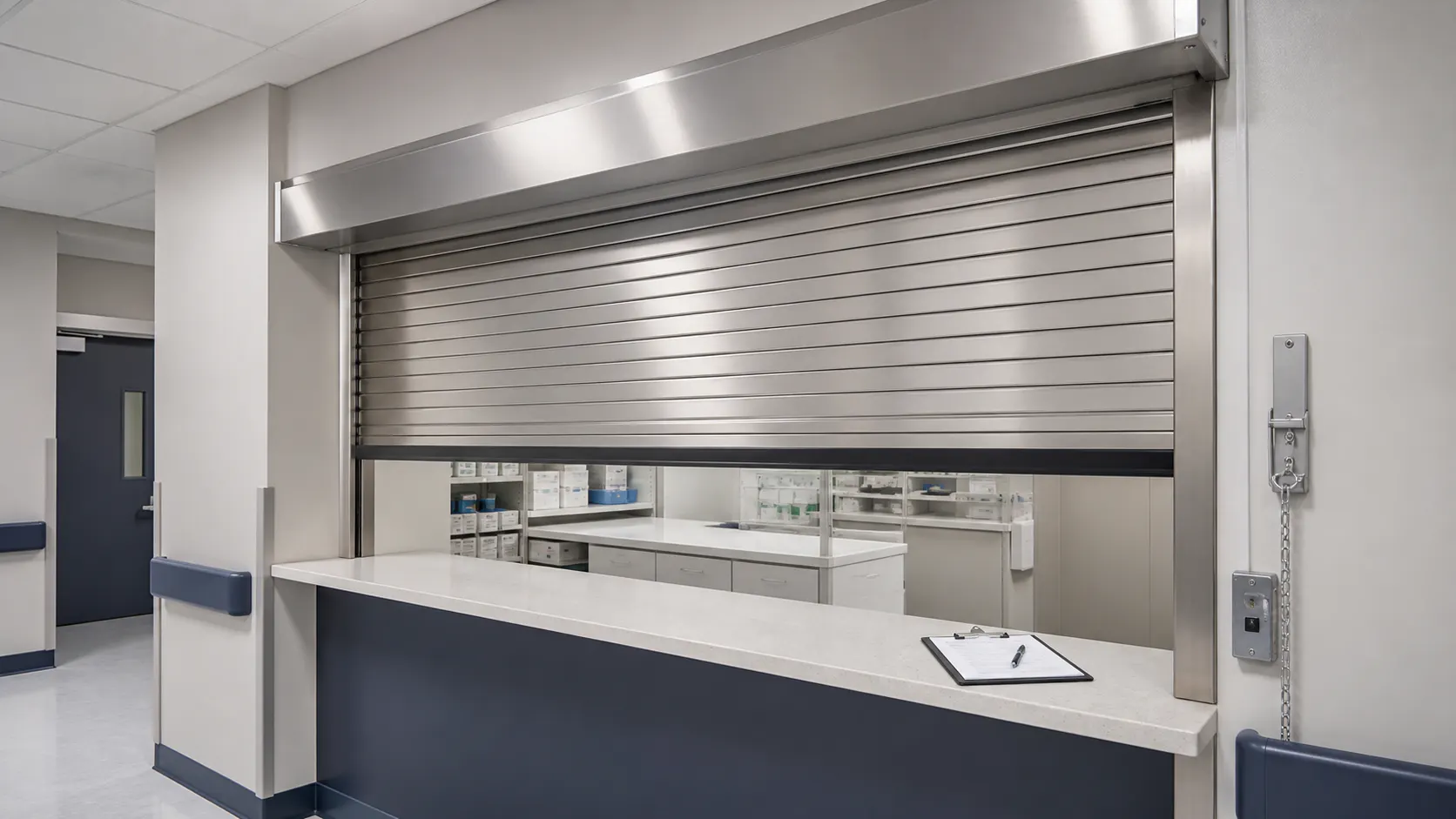
Include non-swinging protectives in the inventory
Healthcare fire-door programs often focus on swinging corridor doors and overlook rolling steel fire doors, vertical fire shutters, service-counter doors, or similar protectives at pharmacies, kitchens, records areas, loading routes, conveyors, and other openings. Build the population from life safety drawings, rated-wall surveys, equipment schedules, labels, and field verification. Record the opening type, rating, manufacturer, model, release method, location, served barrier, and accessibility for inspection and reset.126
Use the correct NFPA 80 chapter and listing
NFPA 80 addresses different door and shutter types in distinct chapters because their construction and operating mechanisms differ. Confirm the CMS-referenced edition, the assembly's listing, and manufacturer instructions before applying an inspection checklist. A swinging-door clearance gauge and closer test do not evaluate a rolling curtain, barrel, hood, guides, bottom bar, release mechanism, expansion clearance, or shutter. Use technicians competent for the specific system and preserve their qualification evidence.125
Inspect the complete physical assembly
Verify visible and legible labels; intact slats, endlocks, curtain, bottom bar, guides, hood, flame baffle, barrel, mounting bolts, anchors, and attachments; alignment, level, plumb, and required expansion clearance; and the absence of missing, broken, blocked, or unapproved parts. Inspect fusible links, chains, cables, S-hooks, drop arms, weights, smoke detectors, and auxiliary hardware as equipped. Do not operate a visibly damaged or obstructed assembly until the condition and safe test method are evaluated.157
Plan the drop test safely
Coordinate clinical operations, security, infection prevention, fire alarm interfaces, work-zone control, and protection of people and equipment before a drop test. Clear the opening and travel path, follow the manufacturer and governing test procedure, and ensure qualified personnel can reset the assembly. A rolling fire door can be heavy and can close rapidly; the test is not a casual demonstration. Document any impairment and interim controls when the opening cannot remain ready during inspection, repair, or reset.134
Test release, closing, and reset
Exercise the required release method and observe that the curtain or shutter closes completely, smoothly, and within the operating parameters applicable to the assembly. Verify that guides, slats, bottom bar, and release components do not bind or hang up. After the drop, reset the system using the approved procedure, reopen it safely, and confirm that the release mechanism is rearmed and the assembly is ready for service. A successful drop without proper reset leaves the facility unprotected.125
Document type-specific results
The annual record should identify the assembly, label, location, inspector, date, applicable criteria, physical-condition results, release method, drop-test outcome, closing behavior, reset, restoration, deficiencies, and corrective-action reference. Note components not present and items not tested rather than leaving ambiguous blanks. Link the protective to alarm or detector test evidence when systems interact. Retain manufacturer or listing information for repairs, field modifications, and replacement parts that affect operation.126
Correct, retest, and prevent obstruction
Route failed components, damaged curtains, painted or contaminated links, obstructed guides, altered counterweights, alignment problems, and unapproved attachments into prompt corrective action. Retest the full release, closing, reset, and restoration sequence after repair. Include normally open counter spaces and overhead openings in routine rounds so storage, shelving, signage, conduit, décor, or equipment does not enter the closing path. Trend repeated service calls and missed assemblies to strengthen preventive maintenance and annual-program completeness.1457
Explore the complete topic
Continue from this article into the connected cornerstone guides, detailed conditions, exact questions, and related services.