
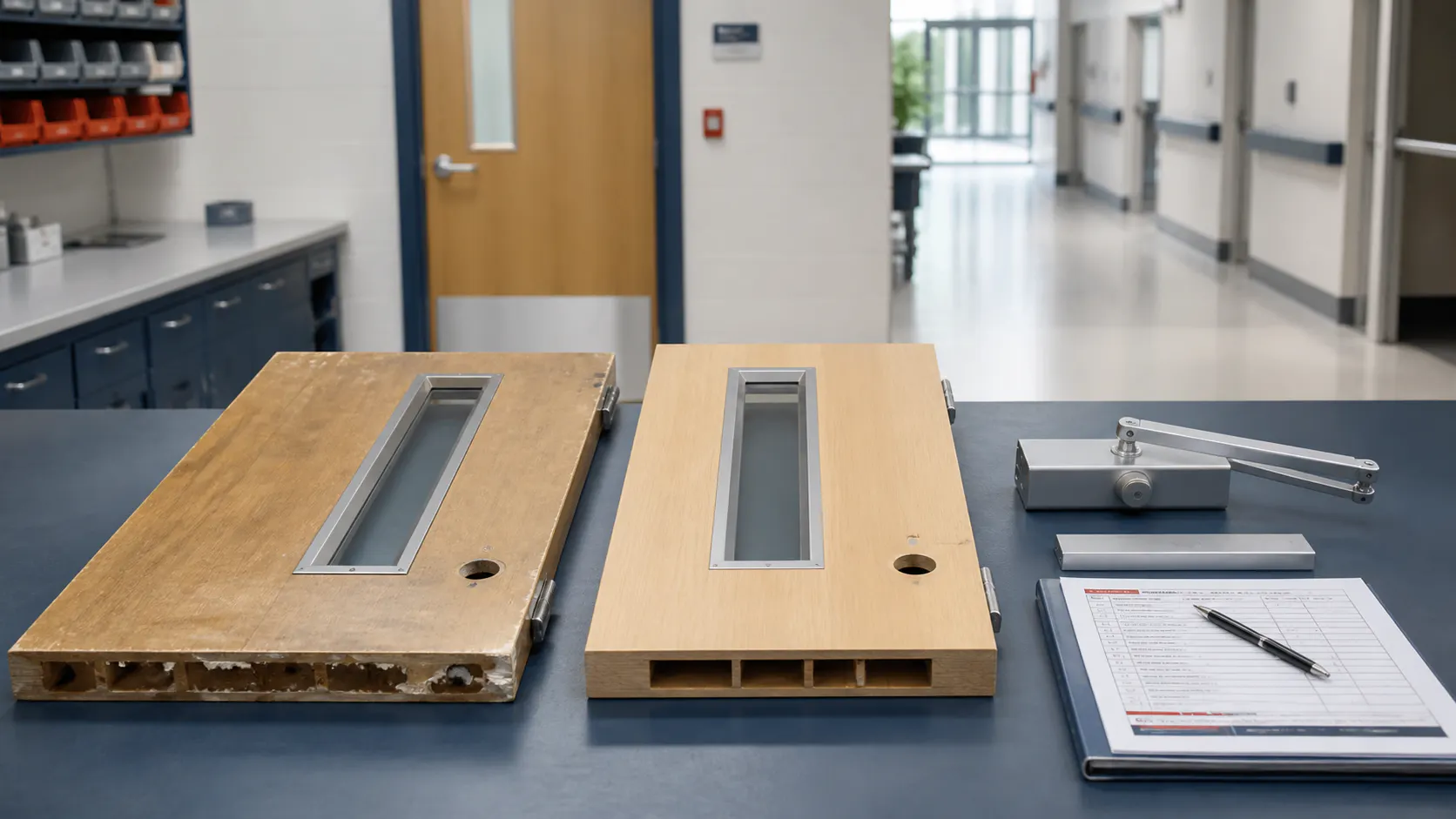
Classify the deficiency before choosing a solution
Begin with the exact opening, barrier function, rating, leaf and frame construction, listing, hardware, observed condition, and failed inspection criterion. Separate ordinary maintenance from damage, missing components, excessive clearances, unapproved preparations, obsolete hardware, and uncertain classification. A repair-versus-replacement decision made from a photograph or contractor estimate alone can miss the assembly interaction. Verify whether the deficiency is isolated or part of a larger pattern across similar doors.128
Use repair for clearly permitted restoration
Repair is appropriate when qualified work can restore the existing listed assembly using permitted methods and compatible components. Examples may include securing hardware, replacing an allowed like-for-like listed component, adjusting a closer, correcting permitted clearances, or repairing through a method accepted for the door construction. Confirm manufacturer instructions and listing limitations. A less expensive repair is not defensible if it introduces unapproved holes, covers labels, changes glazing, interferes with latching, or cannot be inspected and tested afterward.157
Escalate uncertain work to qualified evaluation
When the proposed work exceeds ordinary maintenance or clearly permitted field preparation, obtain written direction through the manufacturer, listing agency, approved field-label service, authority, or qualified design review appropriate to the jurisdiction. Provide complete information rather than asking whether a generic patch is allowed. The evaluator may require a specific repair, field inspection, relabeling, or replacement. Keep a door in failed or pending-verification status until the resulting assembly is accepted and operationally tested.197
Replace when identity or integrity cannot be restored
Replacement is often the more defensible path when the door or frame cannot be identified, damage compromises core construction, unapproved modifications are extensive, components are incompatible, required ratings cannot be established, or repeated repairs have not produced reliable performance. Replacement may also reduce lifecycle cost for obsolete or high-cycle assemblies. Specify the complete opening—including frame, leaf, glazing, hardware, closing, latching, access control, and wall interface—rather than purchasing a rated leaf and assuming it cures every deficiency.134
Account for clinical and operational constraints
Healthcare work can affect patient movement, infection prevention, security, noise, egress, smoke-compartment protection, and fire alarm interfaces. Plan phasing, temporary protection, required Interim Life Safety Measures or other risk controls, and after-hours work before removing an opening from service. Coordinate access-control and clinical-locking functions with the approved life safety arrangement. Operational complexity may affect schedule, but it does not convert an unverified repair into an acceptable permanent condition.3467
Compare lifecycle evidence, not only first cost
Evaluate repair cost, field-evaluation cost, expected service life, lead time, recurring failure, finish and abuse exposure, hardware compatibility, testing, and future documentation. A repair supported by clear listing evidence and durable performance may be preferable to replacement; a series of undocumented low-cost patches may cost more and remain indefensible. Record who made the technical decision, the evidence relied upon, assumptions, approvals, and any conditions that must be maintained.157
Close with inspection, testing, and inventory updates
After repair or replacement, inspect the complete assembly and test closing, latching, sequencing, release, and interface functions. Verify labels, clearances, anchors, glazing, and permitted hardware at the installed opening. Link the original finding to invoices, product data, approvals, photographs, test results, and independent verification. Update the door inventory, drawings, preventive-maintenance attributes, and warranty information. Sample similar openings when the deficiency may share a manufacturer, installer, project, or maintenance cause. Preserve that review with the closure record.1267
Explore the complete topic
Continue from this article into the connected cornerstone guides, detailed conditions, exact questions, and related services.