
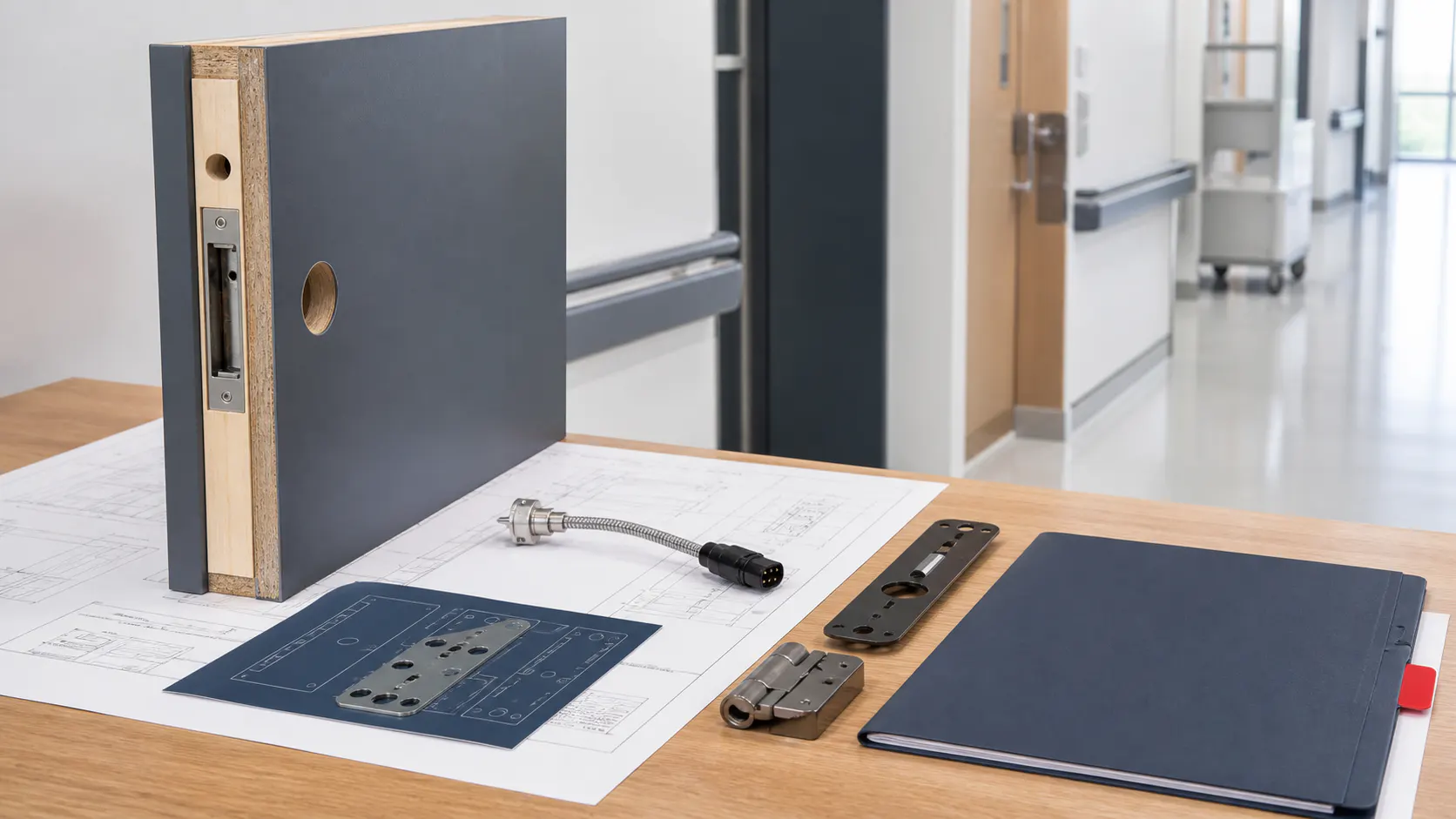
Start with the listing, not the desired hardware
A fire-rated door is one component of a tested or listed assembly. Before drilling, cutting, routing, welding, glazing, plating, or adding electrified hardware, identify the door and frame manufacturers, ratings, construction, label, existing preparations, hardware, wall, and governing NFPA 80 edition. The fact that new hardware is separately listed does not prove that every field preparation is permitted in the existing assembly. Freeze uncertain work until the modification path is established.152
Separate permitted jobsite preparation from modification
NFPA 80 permits limited jobsite preparations within defined constraints, but the details depend on the governing edition, door construction, hardware, and listing. Common factory-prepared or template-directed work should still be verified against the door manufacturer's published instructions and the accepted hardware application. Do not turn a remembered hole-size rule into blanket permission for raceways, viewers, locks, wire transfers, protection plates, edge work, or altered glazing. Document the specific provision or authorization used.137
Coordinate access control and electrified hardware
Healthcare security projects often add electric strikes, electrified locks, power transfers, card readers, sensors, door-position switches, and cabling. Coordinate the fire-door listing with Life Safety Code egress and locking requirements, fire alarm release, power-failure behavior, clinical operations, and pair sequencing. Avoid cutting first and solving the listing later. The project package should show both the permitted physical preparation and the approved operating sequence because either can cause the installed opening to fail.1384
Control the work in the field
Issue a door-specific work order or permit identifying the authorized procedure, qualified installer, tools, templates, components, inspection hold points, and documentation. Protect labels and rated construction. Stop when field conditions differ from the authorization—for example, unexpected core material, prior holes, different hardware, damaged edges, or an unidentified frame. Photograph the opening before and after where permitted. Uncontrolled change orders and technician improvisation are major pathways to modifications that cannot later be defended.167
Inspect and test after modification
After work, inspect the complete fire-door assembly rather than only the new device. Verify label visibility, surface condition, clearances, fasteners, glazing, hardware compatibility, closing, positive latching, pair sequencing, egress, automatic release, alarm interfaces, and power-loss behavior as applicable. Confirm that unused preparations were closed through an accepted method. Retain manufacturer or listing-agency authorization and any field-label report with the installed-opening record.125
Resolve legacy modifications honestly
If annual inspection discovers a prior modification with no supporting record, document the condition and research the door history. Do not assume that long service, a passed alarm test, or separately listed hardware validates the preparation. Seek manufacturer, listing-agency, approved field-evaluation, or replacement direction. Maintain appropriate risk controls while resolution is pending. Trend similar doors installed under the same project or vendor because one undocumented raceway, viewer, plate, or cutout may indicate a broader extent of condition. Record every related opening reviewed.1497
Explore the complete topic
Continue from this article into the connected cornerstone guides, detailed conditions, exact questions, and related services.