
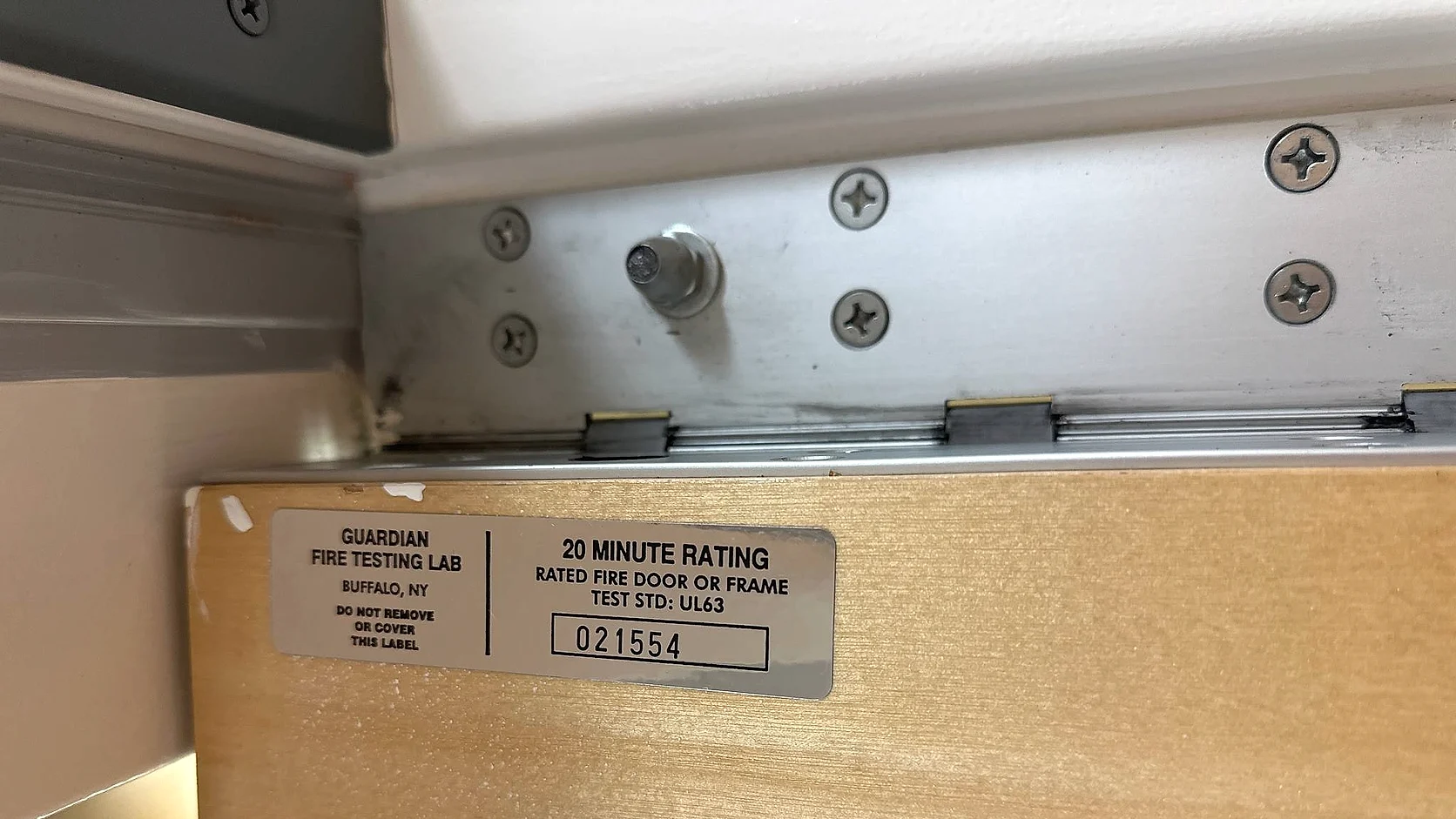
Treat the label as assembly evidence
The fire-door inspection verifies that required labels are visible and legible. A label helps identify the door or frame rating and listing relationship; it is not decorative identification that the facility can recreate. Inspect the door leaf, frame, glazing, hardware, edge, top, and other permitted label locations using safe access. Record whether the label is missing, painted, damaged, covered by hardware or finishes, or simply inconsistent with the controlled door inventory.125
Do not scrape or repaint first
Aggressive scraping, solvents, abrasives, heat, or repainting can destroy remaining label information or damage the labeled product. Protect the area and document the condition before attempting cleaning. Follow the label or door manufacturer's instructions and facility hazardous-material procedures. Where a label is painted over, a qualified party may sometimes expose it without damaging the substrate, but the facility should not assume that any maintenance technique preserves legibility or listing acceptance.147
Reconstruct the opening history
Gather life safety drawings, door schedules, approved submittals, closeout records, prior inspection reports, photographs, purchase records, and manufacturer identifiers. Compare the leaf and frame construction, hardware preparations, glazing, dimensions, and location with those records. This evidence can support evaluation but does not authorize staff to print a substitute label. If the history indicates that a non-rated door was installed in a rated opening, the issue is not a missing sticker; it is an assembly-classification and replacement problem.168
Use the manufacturer or listing agency path
Contact the original manufacturer and listing agency when they can be identified. Provide controlled photographs, serial or production information, dimensions, construction details, and records requested for evaluation. The listing agency may require an onsite field inspection, correction of deficiencies, or replacement before applying an authorized field label. A design professional or fire-door inspector can organize evidence, but cannot independently recreate a certification mark unless acting through an accepted labeling or evaluation program.157
Evaluate the whole opening before relabeling
A readable label does not cure excessive clearances, unapproved holes, damaged construction, incompatible glazing, missing latching, or field modifications. Before relabeling, verify the leaf, frame, anchors, hardware, rating, wall relationship, and operating features as required by the evaluating organization. Correct identified defects through permitted methods and preserve product documentation. Field labeling should confirm an acceptable existing assembly, not become a shortcut for avoiding the investigation needed to establish what was installed.1310
Prevent labels from disappearing again
Add label protection to painting, refinishing, cleaning, signage, access-control, and renovation procedures. Train contractors not to coat, remove, relocate, or obscure labels and require project closeout photographs before areas return to service. During routine rounds, check high-risk locations such as door tops, hinge edges, frames near new finishes, and openings with added plates or electrified hardware. Early identification is less disruptive than reconstructing the listing history during the annual inspection or a survey.1467
Explore the complete topic
Continue from this article into the connected cornerstone guides, detailed conditions, exact questions, and related services.